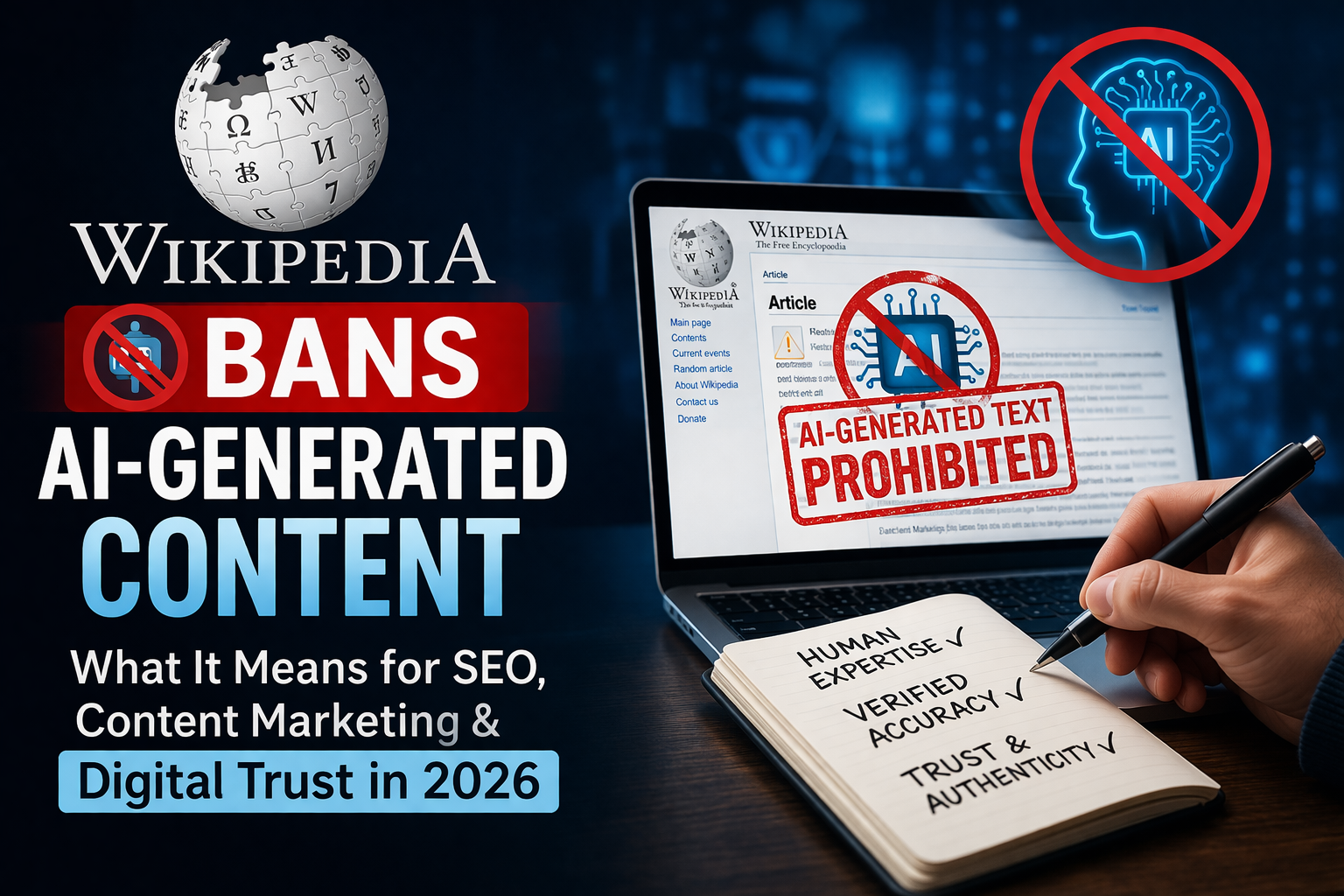
Wikipedia Bans AI-Generated Content: A Big Shift in Digital Content
In a major move that could reshape the future of digital content, Wikipedia has officially banned the use of AI-generated text for writing and updating articles on its English-language platform.
This decision comes amid rising concerns about content accuracy, misinformation, and trust, especially with the rapid growth of tools like ChatGPT, Gemini, and other large language models (LLMs).
For anyone in SEO, digital marketing, or content creation, this is not just news — it’s a signal of where the industry is heading.
⚠️ Why Wikipedia Took This Decision
Wikipedia’s core pillars are:
- Verifiability
- Neutrality
- Reliable sourcing
AI-generated content often struggles with:
- ❌ Hallucinated facts
- ❌ Lack of proper citations
- ❌ Misinterpretation of sources
Because of this, AI-written content was found to violate Wikipedia’s editorial standards.
Editors also reported a surge in AI-generated submissions, making moderation increasingly difficult. Initiatives like WikiProject AI Cleanup were already working to detect and fix such content.
✅ The Only Two Exceptions Allowed
Despite the ban, Wikipedia still allows limited use of AI:
1. ✍️ Copyediting Support
Editors can use AI tools for:
- Grammar correction
- Sentence improvement
👉 But no new content should be added by AI
2. 🌍 Translation Assistance
AI can help translate articles into English only if:
- The editor understands the original language
- The content is manually verified
👉 These drafts must be marked and reviewed before publishing
📊 What This Means for SEO & Content Marketing
This update is a wake-up call for marketers.
🔍 1. Human Content is Back in Power
Search engines like Google already prioritize:
- Expertise (E-E-A-T)
- Authenticity
- Trust
👉 Pure AI content without human input is becoming risky.
🚀 2. Quality > Quantity Strategy
Mass AI content generation is losing value. Instead:
- Focus on original insights
- Add real experience
- Use data-backed content
🧠 3. AI Should Be a Tool, Not a Replacement
The future is:
AI + Human = Best Content
Use AI for:
- Research
- Structuring
- Editing
But keep:
- Human storytelling
- Expertise
- Final validation
🔐 The Bigger Issue: Trust & Digital Authenticity
As AI content floods the internet:
- Users are becoming more skeptical
- Platforms are tightening policies
Wikipedia’s move shows a clear direction:
👉 Trustworthy, human-verified content will dominate
This also aligns with global concerns around:
- Misinformation
- AI bias
- Content manipulation
⚡ Final Thoughts
Wikipedia’s ban is not anti-AI — it’s pro-quality content.
For businesses, bloggers, and marketers:
- Don’t rely fully on AI tools
- Build authority-driven content
- Focus on long-term trust
Because in 2026 and beyond:
🔥 Content that is real, verified, and human-led will rank higher and perform better

Leave a comment
Your email address will not be published. Email is optional. Required fields are marked *